


MS 1184:2014 and UBBL By-Law 34A: Essential Accessibility Obligations for Architects, Developers and Building Professionals in Malaysia
As Malaysia advances toward stronger enforcement of inclusive design — particularly with the anticipated 2026 amendments to the Persons with Disabilities (PwD) Act 2008 — a clear understanding of MS 1184:2014 and Uniform Building By-Laws (UBBL) By-Law 34A is critical for architects, developers, engineers, and project managers.
At AccessConsultants.asia, we help professionals navigate these requirements efficiently through independent access audits, design reviews, and practical training, ensuring compliance while delivering truly universal and inclusive built environments across Malaysia, Sydney, and Perth.
UBBL By-Law 34A: The Legal Foundation
By-Law 34A (inserted via the 1991 amendment to the Uniform Building By-Laws 1984) makes accessibility mandatory. It states that any building or part thereof to which the by-law applies must:
- Provide access to enable persons with disabilities (OKU / PwD) to enter, exit, and move within the building.
- Include suitable facilities for use by persons with disabilities.
Buildings covered include (but are not limited to):
- Offices, banks, shops, department stores, and commercial buildings
- Hotels, hostels, and most residential buildings (except single-family private dwellings)
- Hospitals, clinics, and health facilities
- Schools, universities, libraries, and educational buildings
- Places of assembly (cinemas, theatres, concert halls, religious buildings, community centres)
- Factories, parking buildings, and transport-related facilities
Key point for professionals: Compliance with MS 1184:2014 (and MS 1183 for fire safety aspects) is deemed to satisfy the requirements of By-Law 34A. This makes the Malaysian Standard the primary technical reference during building plan submissions to local authorities such as DBKL, MBPJ, or other local councils.
MS 1184:2014 – Universal Design and Accessibility in the Built Environment (Code of Practice, Second Revision)
Published by the Department of Standards Malaysia, MS 1184:2014 shifts the focus from “access for disabled persons” to universal design principles. It promotes environments that are usable by people of all ages and abilities with minimal or no adaptation.
The standard covers the entire built environment — from external approaches to internal spaces — and applies to new construction, alterations, additions, and (increasingly) existing buildings during major renovations.
Core Principles of Universal Design in MS 1184:2014
- Equitable use
- Flexibility in use
- Simple and intuitive
- Perceptible information
- Tolerance for error
- Low physical effort
- Size and space for approach and use
Key Technical Requirements Professionals Must Address
1. External Access & Parking
- Designated accessible parking bays: Minimum 3600 mm × 4800 mm with adjacent transfer zones.
- Accessible routes from parking/drop-off to entrances (minimum 1500 mm wide, slip-resistant, max gradient 1:20).
- Kerb ramps and tactile warning indicators.
2. Ramps
- Preferred gradient: 1:20 (maximum 1:12 for shorter ramps).
- Minimum clear width: 1200 mm.
- Handrails on both sides (900–1000 mm height).
- Landings required every 9 metres of ramp length and at changes in direction.
3. Entrances & Doors
- Minimum clear opening: 800–900 mm.
- Preferred: Automatic or power-assisted doors at main entrances.
- Level or gently sloping thresholds.
4. Internal Circulation
- Corridors: Minimum 1500 mm wide.
- Doors and openings: Easy-grip handles, contrasting colours.
- Floor surfaces: Slip-resistant with appropriate luminance contrast.
5. Vertical Circulation
- Lifts: Minimum internal dimensions 1400 mm × 1400 mm (recommended larger for stretcher access). Must include Braille, tactile, and audible floor announcements, visual indicators, and emergency features.
- Stairs: Uniform risers (150–180 mm), contrasting nosings, handrails on both sides, and landings.
- Ramps remain the preferred option where feasible.
6. Sanitary Facilities (Accessible Toilets)
- Minimum cubicle size: 1500 mm × 1700 mm (or larger for specific needs).
- Grab bars, alarm systems, lowered mirrors, and accessible fittings.
- Unisex accessible toilets recommended in most public buildings.
7. Signage, Wayfinding & Sensory Considerations
- International symbols of accessibility.
- Tactile and Braille signage at appropriate heights (1400–1600 mm).
- Visual and auditory emergency alarms.
- Adequate lighting (minimum 500 lux in key areas) and acoustic design.
8. Additional Provisions
- Reception counters and service desks at accessible heights (760–860 mm).
- Wheelchair spaces in assembly areas (minimum 1 per 50 seats).
- Management and maintenance requirements, including regular access audits.
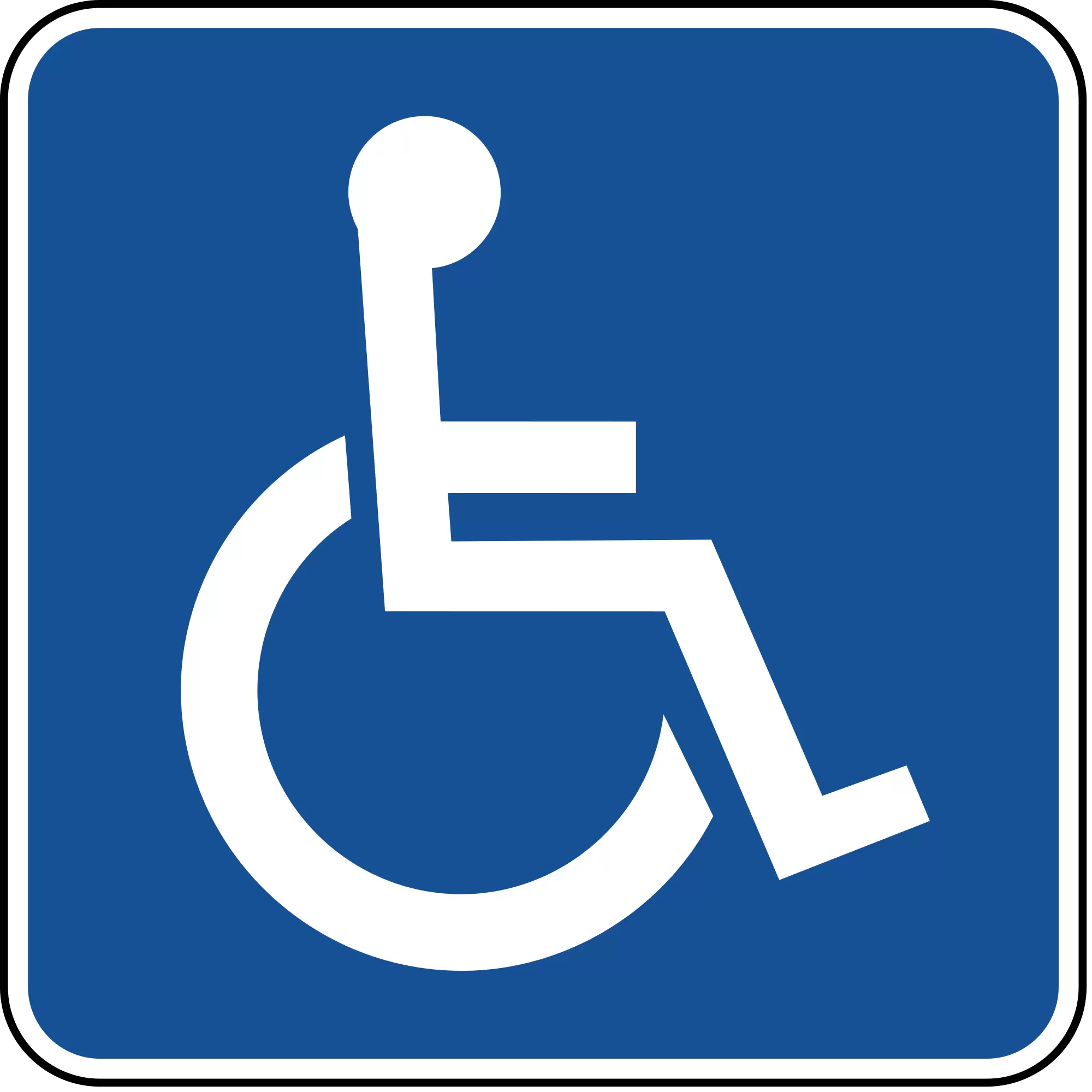
International Symbol of Accessibility
Practical Obligations for Professionals
- Architects & Qualified Persons (QPs): Integrate MS 1184:2014 requirements into schematic design and ensure full compliance documentation in building plan submissions.
- Developers & Owners: Budget for accessibility features from the outset — early integration is far more cost-effective than retrofitting.
- During Construction: Regular site inspections and coordination to avoid non-compliant variations.
- Retrofits & Existing Buildings: While not always mandatory, major renovations or changes of use typically trigger compliance. The impending PwD Act amendments are expected to introduce stronger time-bound requirements and penalties.
Why Early Expert Involvement Matters
Non-compliance risks project delays, rejection of building plans, potential fines, and reputational impact. More importantly, proper universal design enhances user experience, broadens market appeal, and future-proofs assets in an ageing society.
AccessConsultants.asia provides specialist support through our Malaysia-first hybrid model:
- Independent access audits and compliance matrices
- Detailed design reviews and performance solutions
- Regulatory strategy and liaison with local authorities
- Practical training workshops for architectural teams and facilities managers
Our Kuala Lumpur-based team of Malaysian-registered architects, combined with Australian principal expertise, delivers culturally attuned, enforceable solutions that respect local context while meeting the highest standards.
Ready to ensure full MS 1184:2014 and UBBL 34A compliance on your next project?
Contact the team at AccessConsultants.asia today for a no-obligation discussion on access audits, design reviews, or capacity-building training.
SEO Keywords & Tags: MS 1184:2014 compliance Malaysia, UBBL By-Law 34A, universal design Malaysia, disability access consultant Malaysia, accessible building design Kuala Lumpur, access audit MS 1184, OKU accessibility requirements, inclusive architecture Malaysia, UBBL 34A architect obligations.
AccessConsultants.asia – Your trusted partner for compliant, inclusive, and future-ready built environments in Malaysia, Sydney, and Perth.